
Fiber is an important part of a balanced diet. It helps your body in many ways, especially with digestion and keeping your heart healthy. Getting more fiber is even linked to a lower risk of dying from any health condition. So, what is fiber, why does it matter, and how can you get more of it in your diet? Read on.
What is fiber?
Fiber is a type of carbohydrate found in plant foods. Unlike other carbs, your body cannot digest fiber, but it still keeps you healthy. Fiber helps with regular bowel movements. It adds bulk to stool, which helps food move through the body more easily.
There are two types of fiber: soluble and insoluble. Some fruits and vegetables are higher in soluble or insoluble fiber, but most high-fiber plant foods have both.
Why is fiber important?
A high-fiber diet does more than support bowel health. It may also lower the risk of hemorrhoids, diverticulitis and colorectal cancer.
Soluble fiber may lower “bad” cholesterol levels and slow the absorption of sugar into your blood, making it a great tool to manage diabetes. A healthy, high-fiber diet may reduce the risk of type 2 diabetes, reduce inflammation and lower blood pressure.
High-fiber foods are generally more filling than lower-fiber foods. This can help promote a healthier weight, as you are more likely to eat less and stay feeling full longer.
How do I get more fiber in my diet?
The National Academy of Medicine gives these daily fiber recommendations for adults:
You can add fiber to your diet by eating more fruits, vegetables, whole grains, beans, nuts and seeds. Eat a mix of these foods every day to get enough of both soluble and insoluble fiber.
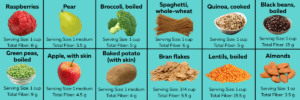
Total Fiber rounded to nearest 0.5 gram. Source: USDA National Nutrient Database for Standard Reference, Legacy Release.
Here are some simple ideas to help you get started:
When adding more fiber to your meals and snacks, increase your intake slowly. This helps lower the chance of bloating or gas while your body adjusts to the change. Also, drink plenty of water throughout the day. Fiber needs water to work well in your digestive system.
While fiber is a simple way to support your overall good health, most Americans do not get enough. By eating more plant-based foods like fruits, vegetables, beans and whole grains, you can increase your fiber each day in a way that feels easy and natural. Start with one or two small changes and build from there. Over time, these changes can help with digestion, build a strong heart and lower your risk for serious diseases.




No Current Comments