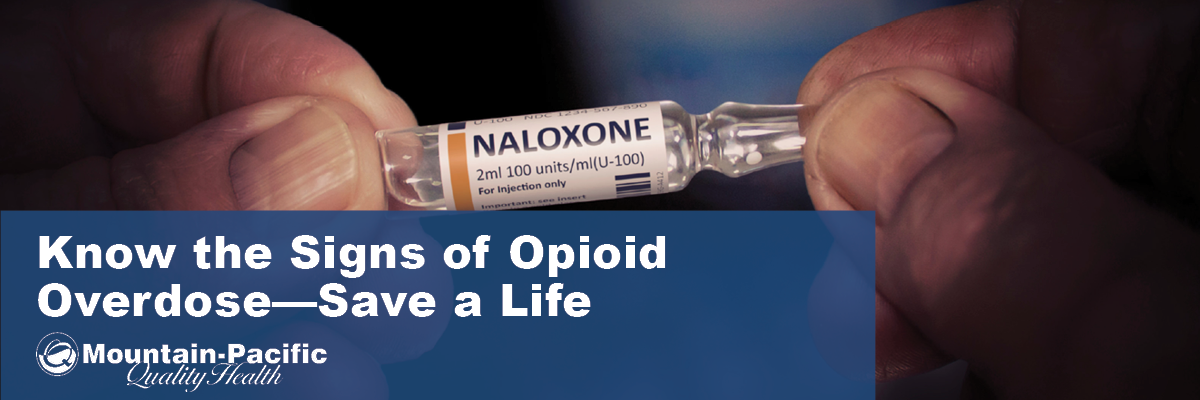
Do you know the signs of overdose or what to do if you think someone has overdosed?
International Overdose Awareness Day is a global event held on August 31 each year to raise awareness about overdose and reduce the stigma of drug-related deaths. In 2019, the United States had more than 70,000 drug overdose deaths, according to the Centers for Disease Control and Prevention (CDC). Over 70 percent of those deaths involved opioids. Nationwide there were 93,331 deaths from drug overdose in 2020 (a record high).
Opioids are pain-relieving medications that include codeine, hydrocodone, morphine, oxycodone, fentanyl and others. Even when used under the supervision of a medical provider, opioid use can be very dangerous, even deadly.
One of the most effective approaches to fighting opioid overdose is a medication called naloxone, also known as Narcan.
What is naloxone and how does it work?
Naloxone is a medication designed to block the effects of opioids and quickly reverse the overdose. This medication should be administered as soon as possible and is most commonly given in the form of a nasal spray. Naloxone can reverse the effects of an overdose within minutes. However, the amount of time naloxone is active in the body (30 to 90 minutes) is much shorter than the length of time opioids can remain active. It is possible for a person to overdose again, which is why it is important to call emergency responders right away.
What are the signs and symptoms of an opioid overdose?
Overdose symptoms vary. Some of the most common signs of opioid overdose include
What should I do if I find someone who has overdosed and naloxone is available?
Follow these steps:
What should I do if I do NOT have naloxone?
Do NOT leave the person alone and do not give them anything to eat or drink or try to make them vomit.
How to get naloxone
Emergency responders are often the ones to administer naloxone. However, family, friends or trained bystanders can also give the medication.
For anyone worried about finding someone who has overdosed, the decision can be made to carry the medication and become trained on how to use it. Local organizations offer trainings, or trainings can be accessed online.
Naloxone can be purchased in many pharmacies, in most cases without a prescription from your medical provider. Many states have standing orders or prescriptive authority that allow the pharmacy to dispense naloxone to patients. For information on how to get naloxone and the rules and regulations in your state, visit the SAFE Project website.
You can save a life!
While naloxone has been described as a “miracle drug” by some, it is not and cannot be the only solution to the opioid crisis. Naloxone can be used to reverse the effects of opioids in someone who is actively overdosing, but it does not prevent future use, future overdose or addiction. Learn more about where to find treatment and support for people who misuse or abuse opioids.
This material was prepared by Mountain-Pacific Quality Health, a Medicare Quality Innovation Network-Quality Improvement Organization (QIN-QIO), under contract with the Centers for Medicare & Medicaid Services (CMS), an agency of the U.S. Department of Health and Human Services (HHS). Views expressed in this material do not necessarily reflect the official views or policy of CMS or HHS, and any reference to a specific product or entity herein does not constitute endorsement of that product or entity by CMS or HHS 12SOW-MPQHF-AS-CC-8/21-167.



No Current Comments