
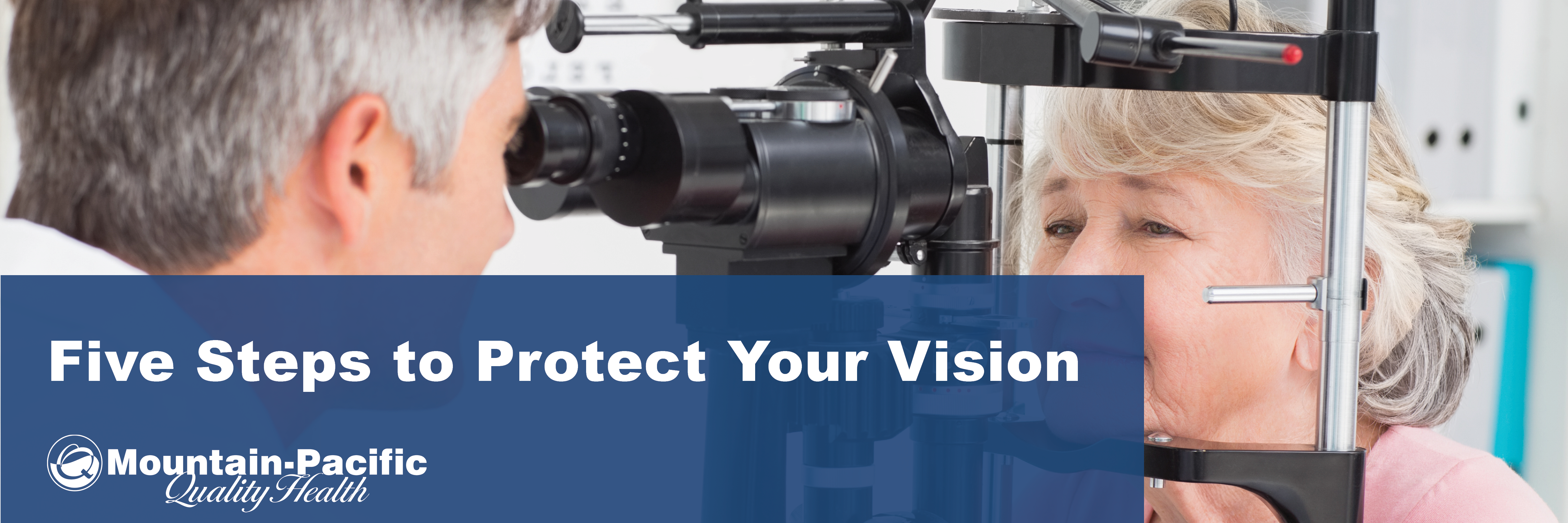
Though you use our eyes every day, how much do you know about keeping your eyes healthy and your vision clear? Here are some tips to help you see your best.
1. Routinely see an eye doctor.
Even if you feel like you can see just fine, you could have eye problems and not know it. Many eye diseases do not have early symptoms. Find an eye doctor you trust by asking your friends and family where they go or check with your health insurance plan to find a doctor near you.
You may want to consider whether you would prefer an optometrist or an ophthalmologist. Optometrists have a doctorate degree in optometry, so the initials OD come after their names. Optometrists can perform routine eye exams, prescribe glasses and contact lenses and can help you with eye health problems and managing many eye health issues. An ophthalmologist is a medical doctor (MD or DO) who specializes in eye and vision care. Ophthalmologists provide all the services optometrists can, plus have more training on eye health issues and are licensed to perform eye surgery.
Whichever type of eye doctor you choose, be sure to talk with him or her about a comprehensive dilated eye exam—it is the only way to catch many eye diseases early, and it is painless!
2. Take care of your overall health.
Healthy habits are good for many parts of your body, including your eyes. Nutritious foods and physical activity lower your risk for diseases and conditions that can hurt your eyes, such as diabetes or high blood pressure. To keep your overall health and your vision at their best, follow these familiar tips:
3. Cover your eyes.
Protect your eyes from harm with these tips:
4. Practice the 20/20/20 rule.
Looking at your computer or other screens for a long time can strain your eyes. Give screens a rest by taking a break every 20 minutes to look at something about 20 feet away for 20 seconds.
5. Know your history.
Many eye diseases or conditions run in the family. Talk with your family members to find out if they have had any eye problems such as age-related macular degeneration or glaucoma. Talk to your eye doctor about what your family tells you and learn about any steps you can take to lower your risk.
Want to test your eye knowledge? Learn more about your eyes and healthy vision with this short and fun quiz!




No Current Comments