
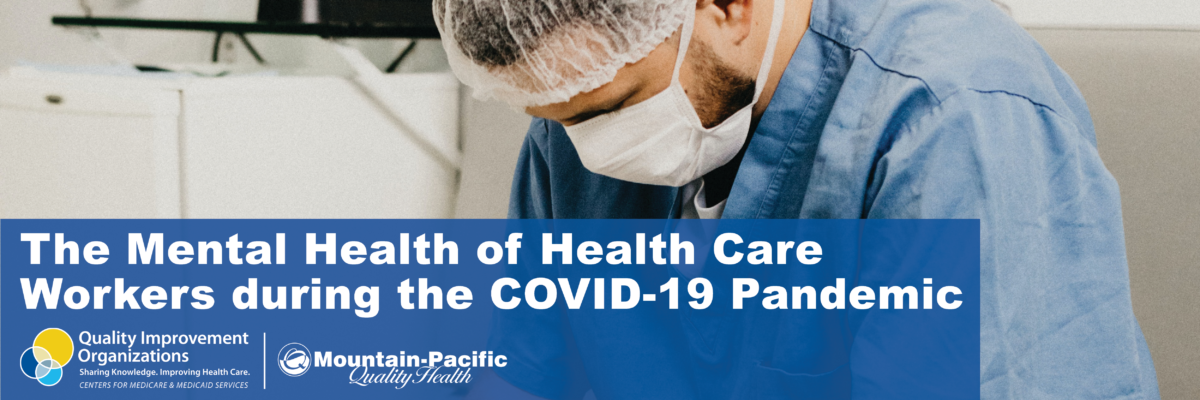
“Not all heroes wear capes. Some wear scrubs.”
It’s a phrase that has been popping up all over social media and elsewhere on the Internet, usually accompanied by a photo of a health care worker. Other pictures show health care workers after long shifts, their faces lined, bruised or sometimes even cut by wearing personal protective equipment (PPE) for hours upon hours. Physicians, nurses and other health care professionals put themselves at risk of exposure to the new coronavirus every day, not only while taking care of the surge of patients testing positive for COVID-19, but also those patients who need other care—everything from childbirth to broken bones to heart failure to cancer treatment. It’s not uncommon for health care workers to also suffer from the accumulation of tragedies they witness as part of their jobs, and this experience is accelerated during a pandemic.
Occupational stress was statistically high among health care professionals before the COVID-19 pandemic. Now, around the world, health care workers are making life-altering triage decisions due to lack of ventilators. In the United States, the supply chain was disrupted, and hospitals are in bidding wars for PPE to protect their staff. Treatment options for patients is limited and a vaccine isn’t available. Hospitals in outbreak hot spots are overrun with COVID-19 patients, depleting the amount of beds available. And without proper PPE, health care workers are putting themselves, their family and loved ones and other patients at risk of contracting and spreading COVID-19.
As of April 15, 2020, 9,300 U.S. health care workers have tested positive for COVID-19, according to a recent report from the Centers for Disease Control and Prevention (CDC). Of that number, 27 have died and 55 percent believe their exposure happened at work.
In the midst of great personal risk, supply shortages and mental and physical fatigue, reports and articles are emerging of nurses already hitting their breaking points. The U.S. Department of Veterans Affairs (VA) National Center for PTSD says health care workers should be carefully monitored for their response to the following kinds of stressors:
When the burdens of COVID-19 ease and the health care system begins to return to normal, what will recovery look like? How will health care workers, especially those working closely with COVID-19 patients, be affected?
Following the Severe Acute Respiratory Syndrome (SARS) epidemic in 2003, psychologists studied the effect of quarantine on the mental health of health care workers. In their findings, symptoms of acute stress disorder, depression and alcohol abuse were more prevalent among health care workers who were quarantined or self-isolated to protect themselves and loved ones from contracting the disease. Even three year later, the study found post-traumatic stress disorder (PTSD) symptoms caused by quarantine were more strongly associated with health care workers.
Returning to normal won’t happen overnight. We will all emerge from our shelter-in-place and physical distancing orders in different ways. As a society, it’s important to understand our health care workers will require a period of readjustment.
The VA National Center for PTSD and psychologists say self-care is crucial in helping health care workers move forward in the aftermath of COVID-19. Health care workers should make their mental health during reintegration a priority by
According to the VA National Center for PTSD, if stress persists for longer than two to three weeks and begins interfering with daily life, health care workers should consider seeking formal mental health treatment.
Read our other COVID-19-related articles for more information on this topic:
Developed by Mountain-Pacific Quality Health, the Medicare Quality Innovation Network-Quality Improvement Organization (QIN-QIO) for Montana, Wyoming, Alaska, Hawaii and the U.S. Pacific Territories of Guam and American Samoa and the Commonwealth of the Northern Mariana Islands, under contract with the Centers for Medicare & Medicaid Services (CMS), an agency of the U.S. Department of Health and Human Services. Contents presented do not necessarily reflect CMS policy. 12SOW-MPQHF-AS-CC-20-18




No Current Comments