
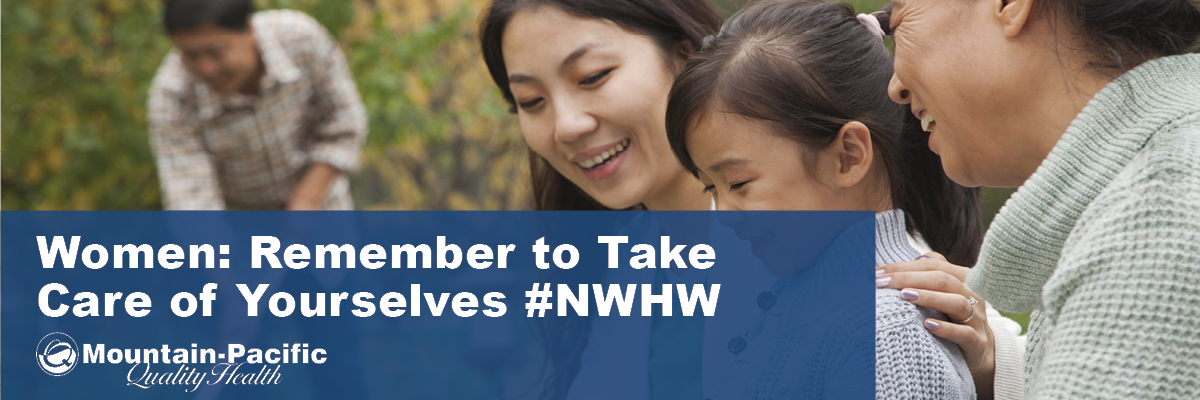
According to the Centers for Disease Control and Prevention (CDC), two out of every three caregivers in this country are women. Being a caregiver means providing regular care to children, adults or people who have chronic illnesses or disabilities. While being a caregiver is often fulfilling and rewarding, it can also take a physical and mental toll, creating increased risk for illness, depression and anxiety.
This week is National Women’s Health Week. This health observance begins each year on Mother’s Day and encourages women to make their health a priority.
With busy lives and others to take care of, many women often put their own wellbeing aside. However, as actress and feisty comedienne Lucille Ball reminds us: “Love yourself first, and everything else falls in line. You really have to love yourself to get anything done in this world.”
Here are five ways women can prioritize their health, not only in honor of National Women’s Health Week, but every day.
1. Regularly check in with your health care providers.
If you feel like you are too busy to get regular check-ups, you are certainly too busy to get sick. Making time to get screenings, exams and other preventive care helps protect your health. Look into what screenings you need and when, depending on your age. Getting regular pap tests to check for cervical cancer and mammograms to check for breast cancer are two important screenings to bring up with your doctor. One positive outcome from dealing with the COVID-19 pandemic is the increased use of telehealth to provide certain health care services. Talk with your health care providers about whether you can get certain check-ups by phone or video chat.
2. Learn about healthier eating habits.
Good nutrition can be very similar for both men and women—fruits, vegetables, lean proteins, whole grains and fat-free or low-fat dairy products. However, women have some specific nutritional needs. Among them, getting enough calcium, vitamin D, iron and folic acid.
Talk with your doctor about your diet and whether supplements might be needed to maintain good nutritional health.
3. Get active.
We have all heard over and over again about the importance of exercise, but it really is key to both physical and mental health. Physical activity lowers your risk for heart disease, the leading cause of death for women. It also helps reduce anxiety, stress and depression, while improving brain function. If you do not want the expense of joining a gym, there are other ways to stay active.
If you have any concerns about your health or safety while exercising, talk with your doctor about possible workout plans that are best for you.
4. Prioritize your mental health.
To cope with daily stresses and accomplish your personal goals, you must focus on good mental health. Mental health conditions are not necessarily preventable, but you can take steps to support your mental health. The above steps contribute to good mental health (seeing a doctor regularly, exercising and eating well), as does getting plenty of sleep. Other steps include taking time to do activities you enjoy, finding time to relax, staying connected with others, talking about how you feel with those you trust and recognizing when you need help. If your feelings or thoughts become overwhelming and impact how you function in your day-to-day life, reach out to your doctor. He or she can direct you toward health care professionals, programs or other resources to support you.
5. Make healthy decisions for yourself every day.
As the saying goes, it’s the little things that count, and that applies to daily choices that help keep you safe and healthy. Drink water. Take breaks from the news or social media. Wear sunscreen. When driving, focus on the road (not your phone or other distractions). Be smoke free. Stretch. Learn something new. Get outdoors. Small, daily activities stack up to overall better health, so you can take good care of yourself and those around you.
Practicing good health is not always easy. However, finding healthy habits you enjoy improve your chances of sticking to a healthier lifestyle—making for an overall healthier you.




No Current Comments